
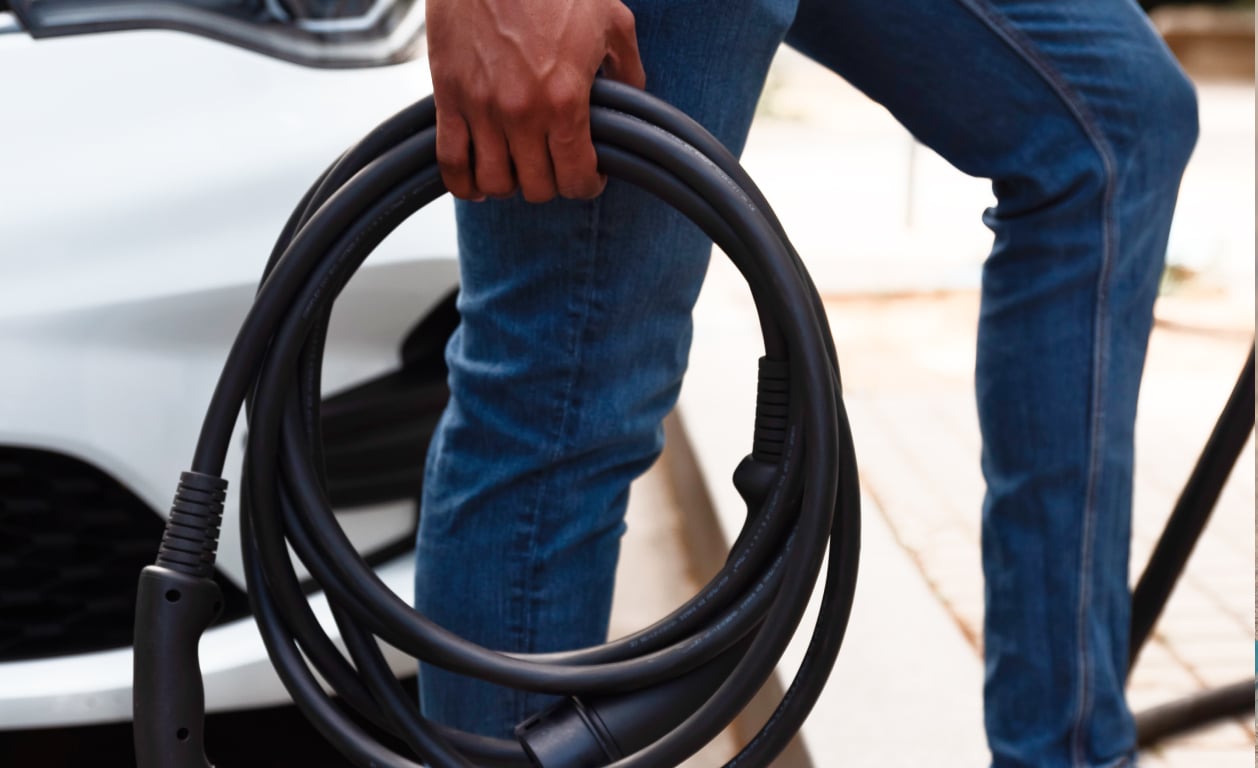
Deploying charging infrastructure is about more than just the wallbox. For fleet managers, the humble charging cable is a critical operational component. A mismatch in cable length or type can lead to driver frustration, safety hazards, and even failed charging sessions that impact the next day's duty cycle.
Whether you are specifying home chargers for employees or equipping a depot, the choice between tethered and untethered units, and the subsequent cable strategy, dictates the usability of your infrastructure.
Tethered vs. untethered: The fleet case
Before specifying cable lengths, you must determine the hardware configuration.
Tethered units (Fixed Cable)
A tethered charger has the cable permanently attached to the unit.
- Pros: High convenience. Drivers arrive home, uncoil, and plug in immediately without retrieving a cable from the boot. This reduces "friction" and encourages consistent charging habits.
- Cons: If the cable is damaged, the entire unit may need a call-out repair. It also locks the unit to a specific connector type (Type 1 or Type 2), though Type 2 is now the standard for almost all modern fleet vehicles.
Untethered units (Socket Only)
An untethered charger (or "universal socket") features a socket into which the driver plugs their own cable.
- Pros: Flexibility. A driver can swap cables if they change vehicles or need a longer reach. It provides a cleaner look on the employee's driveway, which can be a factor in gaining acceptance for home installation.
- Cons: The driver must use their own cable, adding a step to the charging process.
Specifying the right cable length
Standard cables typically range from 5 to 7.5 metres. When procuring cables or specifying tethered units, consider the operational environment to avoid safety risks.
Audit the Parking Orientation Does the driver reverse into the driveway or drive in forward? Charge ports are located differently on every vehicle (nose, side wing, or rear quarter). A 5-metre cable might reach the nose of a Nissan Leaf but fail to reach the rear port of a Volkswagen ID.3 if the driver parks nose-in.
Trip Hazards and Liability Cable management is a health and safety issue. A cable that is too short creates strain on the port and the unit. A cable that is too long becomes a trip hazard for the public or the employee's family. Fleet policies should mandate that cables are coiled correctly when not in use to mitigate liability.
Charging scenarios and cable strategy
Home Charging (Depot or Driveway)
For home fleets, a 5 to 7.5-metre cable is generally sufficient. If the vehicle is consistently parked far from the wallbox due to obstacles or shared driveways, a 10-metre upgrade may be required.
- Rightcharge tip: We recommend tethered units for dedicated fleet vehicles to ensure the cable is always available and ready, reducing the barrier to nightly plugging in.
Public Charging
Drivers using the public network (AC posts) will require their own "Type 2 to Type 2" cable. These are rarely tethered at the charge point.
- Strategy: Ensure every fleet vehicle is equipped with a high-quality, durable 5-metre Type 2 cable kept in the boot. This is an essential tool of the trade for any EV driver.
The risks of extension leads
A common query from drivers is whether they can use standard domestic extension leads or dedicated EV extension cables to bridge a gap.
You should strongly advise against using extension cables. Adding connection points increases electrical resistance, which can lead to voltage drops and overheating. This is a significant fire risk and often voids the warranty of both the vehicle and the charger. If a standard cable cannot reach, the solution is to relocate the vehicle or install a new charge point closer to the parking bay, not to daisy-chain cables.
Frequently asked questions for fleet drivers
1. What is the difference between Type 1 and Type 2? Type 2 is the European standard and will be found on almost all new fleet vehicles (vans and cars) delivered in the UK. Type 1 is found on older models (e.g., older Mitsubishi Outlander PHEVs or first-gen Nissan Leafs). When procuring new infrastructure, Type 2 is the default standard.
2. Can I lock the cable to the charger? Yes. Most modern untethered smart chargers allow the driver to permanently lock the cable into the socket via the app. This effectively converts an untethered unit into a tethered one, offering the best of both worlds: security and convenience.
3. What charging speed do I need? For home and depot AC charging, the standard is 7kW (single-phase). This adds roughly 25-30 miles of range per hour, easily recharging a van or car overnight. "Fast" and "Rapid" DC charging (50kW+) is typically reserved for public motorway charging due to the high cost of three-phase grid connections.
Summary
The charging cable is the lifeline of your electric fleet. A broken, missing, or too-short cable means a vehicle that isn't charged for the morning shift.
- Audit driver driveways: Ensure the cable length matches the parking reality.
- Standardise on Type 2: This is the universal standard for modern fleets.
- Prioritise convenience: Tethered units or locking cables reduce friction and ensure compliance with charging policies.