

EV fleet home charging in the UK
With the UK government’s Zero Emission Vehicle (ZEV) mandate driving rapid adoption of electric vehicles (EVs), fleet managers are making big decisions about how and where their drivers will charge.
If you’re looking to reduce driver downtime, save your fleet money and improve driver satisfaction, then home EV charging is a no-brainer. It’s consistently the most cost-effective and convenient option for companies and drivers.
As Ben King from The AA recently said in the Rightcharge webinar: “When drivers can charge at home, we see happier teams and lower operational costs. It’s a no-brainer when managed well.”
From installation logistics to accurate EV home charging reimbursement, here’s what every fleet manager needs to know.
Why home EV charging matters for fleet managers
EV fleet home charging isn’t just about convenience. It also has many other benefits for companies:
- Lower electricity costs compared to public EV charging stations
- Off-peak charging savings with overnight rates
- Higher driver productivity with less downtime for charging
Home EV charging vs public charging costs
Considerations
Home EV charging
- Cost per mile: 1.7p - 6p
- Convenience: Overnight charging at the driver’s home
- Infrastructure: One-time install per driver
-
Public EV charging
- Cost per mile: ~16p
- Convenience: Requires detours and time
- Infrastructure: Dependent on network availability
When reviewing the home EV charging vs public charging cost comparison, fleets consistently see the cost savings and operational efficiency favouring home setups.
Key considerations for fleet managers
Installation and infrastructure
- Confirm driver home charging eligibility, including off-street parking access and electrical capacity.
- Use OZEV-approved installers to meet UK compliance standards.
- Plan installation timelines to avoid delays in EV deployment.
- Have a process for exceptions, such as drivers without suitable setups who may need alternative approaches, such as workplace or public charging options.
Cost management for home EV charging
- Budget for hardware, installation fees and factor in UK government EV charger grants.
- Ensure drivers are reimbursed fairly so they’re not out of pocket and creating risks for a smooth EV transition.
- Implement smart EV charging to take advantage of off-peak rates and reduce electricity costs.
Data tracking and monitoring
- Use EV charging data tracking to log usage, mileage, cost, and carbon reporting metrics.
Safety and compliance for home charging
- Partner with a recommended home EV charger installation network.
- Ensure chargers meet current UK safety regulations.
- Conduct periodic safety inspections and maintenance.
Common challenges in home EV charging and how to overcome them
We speak to fleet managers every day and the most common hurdle they always share in relation to rolling out home EV charging is driver resistance. Many drivers aren’t familiar with how EV charging works, how long it takes, how much it costs or how they’re going to be fairly reimbursed. Clear communication, ongoing training and peer support are vital in the early days.
Invest in clear, practical training on EV charging basics and the tangible benefits for drivers. Real-world success stories from your early adopters within the fleet can be especially persuasive, showing that home charging is not only manageable but often more convenient than traditional refuelling.
Another challenge is coordinating installations for multiple drivers across different locations across the fleet. Without a structured project plan, the process can become fragmented and result in varying costs and timelines. Partnering with a single, centralised installation provider helps ensure consistency in equipment, compliance, general experience and pricing.
Reimbursing drivers fairly and accurately for home EV charging is also a common sticking point. Manual expense claims can be slow and a source of frustration for drivers. Using existing suppliers, such as Rightcharge, businesses can easily pay for and analyse the charging of their fleet’s electric vehicles at home.
The business case for EV home charging for fleets
The financial impact of moving from public to home charging can cut annual charging costs by up to 75% per driver. For a 100-vehicle fleet, that translates into £3.17 million saved over five years, with each driver saving an average of £2,040 per year on energy. Add the reduced downtime, worth around £4,500 per driver per year and the business case becomes impossible to ignore.
This cost efficiency also drives higher driver satisfaction and retention. When drivers can charge overnight at home, they start their day with a full battery and avoid time-consuming detours to public charging stations. That convenience, coupled with fair and automated reimbursement, makes the transition to EVs smoother and more appealing for your workforce.
From a sustainability perspective, home charging supports more accurate fleet carbon reporting. Energy consumption is easier to track, renewable tariffs are simpler to source, and data can feed directly into ESG and compliance reports. This transparency strengthens both environmental credentials and corporate reporting obligations.
Finally, shifting charging away from the public network means less dependency on variable pricing, availability issues, and potential reliability problems. Your fleet becomes more predictable, resilient, and operationally efficient, keeping vehicles on the road.
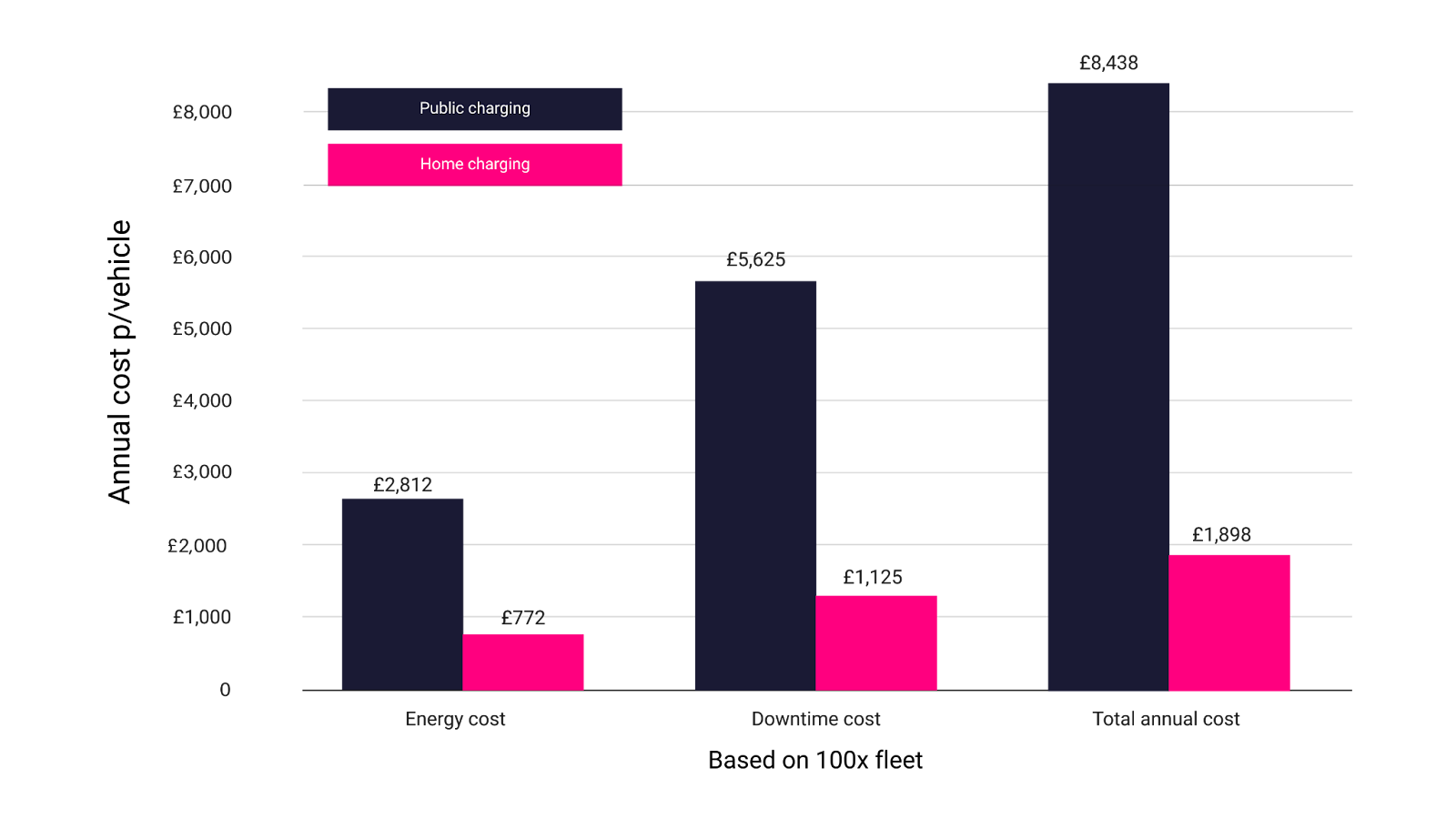
EV home charging reimbursement benefits at a glance
- Lower total cost of ownership (TCO): save up to 75% per driver on charging costs
- Happier drivers, higher retention: full battery every morning, less driver downtime
- Stronger sustainability credentials: accurate carbon tracking and reporting
- Reduced reliance on public infrastructure: predictable, reliable charging operations at more convenient times for drivers
Conclusion
When implemented effectively, EV home charging reimbursement can dramatically reduce operational costs, improve driver satisfaction, and help meet sustainability targets.
With early planning and the right partner, you can streamline installations, automate reimbursements, and keep your fleet running cost-effectively.
Ready to optimise your fleet’s home charging strategy?