
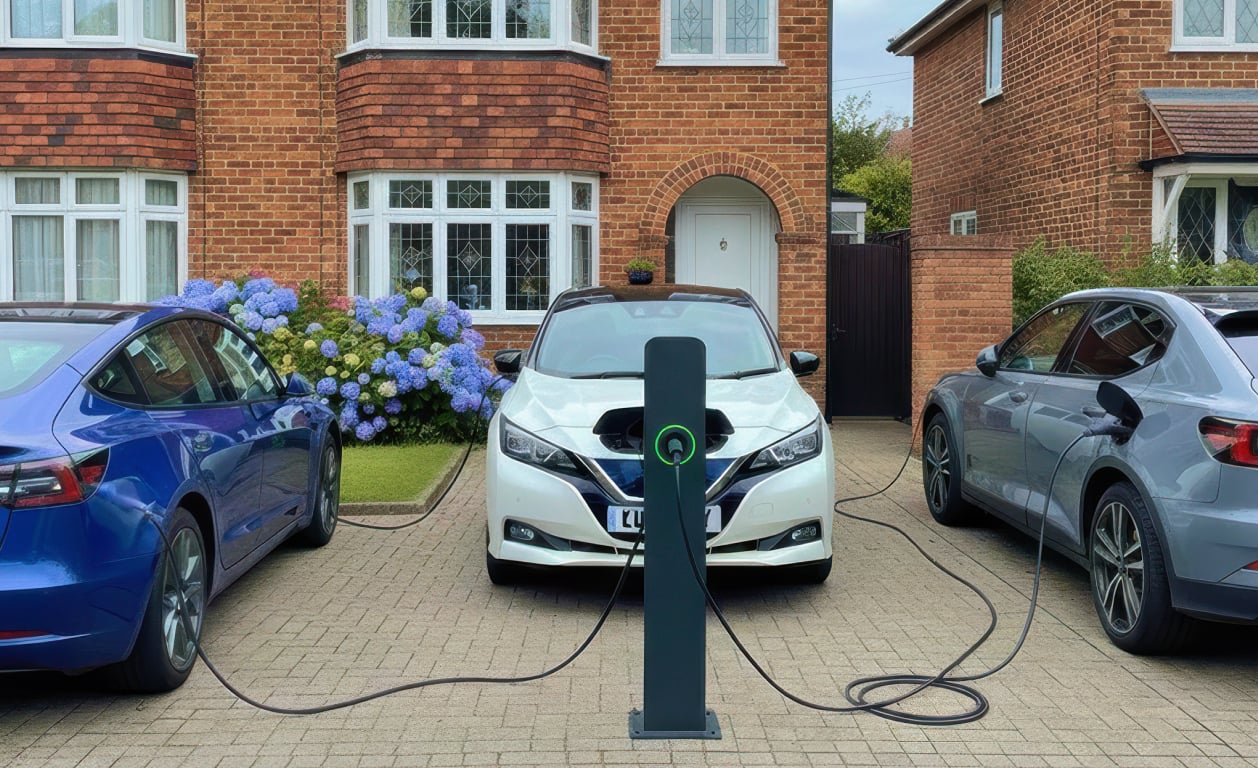
From 1 October 2026, VAT on home electricity is being cut from 5% to 0% as a temporary cost-of-living measure. Running for six months, to the end of the financial year on 31 March 2027. For many it's a £20-25 cut on their home energy bill. For a fleet of EV drivers who charge at home, here's what this changes and what it doesn't.
The VAT cut closes an old imbalance (for six months!)
The way VAT falls on EV charging has always been questioned for electric fleets. Charge on the public network and you pay 20% VAT, which a fleet can reclaim. Charge at home and you paid 5% VAT that a fleet couldn't reclaim, so on tax alone the public network held the advantage. With home electricity dropping to 0% VAT, that edge disappears for the next six months.
What the VAT cut means for your fleet
The saving is real, but it's modest and it's temporary. For one driver, the cut is worth single figures across the six months. Across a few hundred drivers it becomes a number worth tracking, particularly with electricity rates predicted to rise later in the year. The 0% rate then returns to 5% at the end of the financial year, unless the government extends it.
The reason home charging wins on cost
The VAT cut doesn't touch the main reason home charging is cheaper; that sits in the price of the electricity itself. Most of what you pay at a public charger is the network, the standing charges and the supplier's margin wrapped around the energy, and home charging strips much of that out. That's where the AA found its savings and none of it came from tax. After switching to Rightcharge, 82% of its charging now happens at home, cutting the cost from around 74.1p/kWh in public to 22.6p/kWh at home and saving up to £1,000 a year per driver.
How Rightcharge helps your fleet monitor the savings
The cost savings only shows up if home charging is reimbursed accurately and public charging is easy to monitor. Rightcharge calculates the exact cost of every home session and pays it straight to the driver's energy account, so drivers are never out of pocket, even as electricity prices change. Add the public charge card and every home and public session lands on a single monthly bill, with the 20% VAT on public charging easily reclaimable.
Conclusion
Home is the cheapest place to charge and the VAT cut makes it slightly cheaper (temporarily)l. The fleets that see the most savings are the ones moving more charging home, reimbursing it accurately and reclaiming public VAT with ease, not the ones counting on a temporary tax break.