
Our State of fleet charging: H1 2026 report, built on tens of thousands of sessions across the Rightcharge platform, found that most fleet charging energy already comes from home, at the lowest possible cost. The energy that costs more runs through the public network, and the data shows the real lever for change isn't hardware or policy. It's driver buy-in. Here's what the numbers say and what fleets are doing about it.
What the data actually shows
Charging behaviour isn't as fixed as most fleets assume, and that's good news for anyone trying to change it.
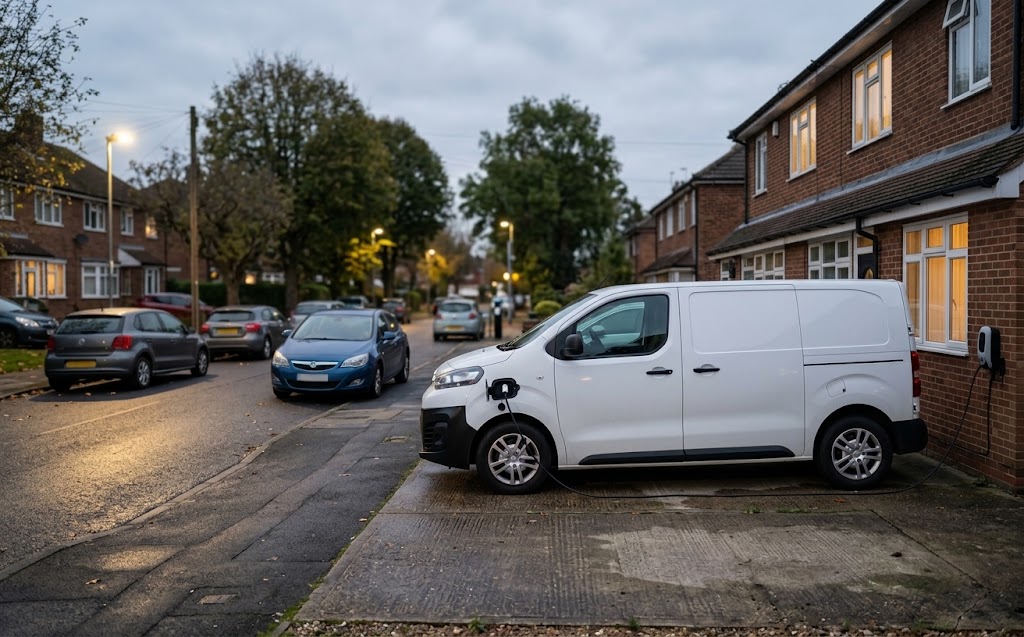
Most energy still comes from home: in H1 2026, home charging made up 59% of all energy consumed on the Rightcharge platform, with the remaining 41% coming from the public network. Some drivers have no way to charge at home at all, and for them the public network is the only option.
Timing skews by location: 71.2% of home charging sessions happen outside traditional business hours, while 80.5% of public sessions happen during them. The cheapest charging happens where a vehicle sits still for a long stretch; the most expensive happens while it's out working.
Why drivers don't shop around
The barrier to better charging habits isn't awareness. It's incentive.
The driver picks, the fleet pays: there's little reason for a driver to hunt out the cheaper operator or wait for the cheaper hour when it isn't their money on the line. Knowing when and where each driver plugs in is where it starts; the harder part is giving them a reason to plug in differently when the bill isn't theirs.
A policy memo won't fix that: rules that aren't backed by visibility tend to get ignored; a driver who can see the cost of their own session has a reason to care that a written policy doesn't create.
What's working for fleets closing the gap
The fleets seeing the biggest shifts in driver behaviour are giving drivers information, not instructions.
Make charging costs visible to drivers: show a driver the price of the session they just plugged into, not just a line on a fleet report six weeks later.
Make the cheap choice the easy choice: steer drivers towards the lower-cost operators by default, rather than leaving the choice open.
Start with home, then tackle the road: 59% of energy already runs through the cheapest option. The next lever is managing when and where the remaining 41% happens on the public network.
Conclusion
Knowing when and where each driver plugs in is the first step. Giving them a reason to plug in differently is the second, and it's the one most fleets haven't taken yet.
Want the full driver behaviour data, alongside cost and carbon benchmarks from H1 2026? Click here to download the full State of fleet charging: H1 2026 report.